
1)Emil Iontchev, 1)Rashko Vladimirov, 2)Rosen Miletiev, 1)Tsvetan Petrov
1)Todor Kableshkov University of Transport, Sofia, Bulgaria
2)Technical University, Sofia, Bulgaria
https://doi.org/10.53656/isct-2025.25

Pages 295-305
Abstract. The article presents a project of LoRaWAN network designed to implement a “smart irrigation system”. The network architecture includes two remote end modules connected to a standard gateway. The freely available The Things Network (TTN) is used as a network server. The data are received and commands are sent through the application server implemented on the Raspberry Pi platform. The received data are stored in the specialized InfluxDB database. Their visualization in graphical form is performed with Grafana. A Semtech calculator is used to theoretically determine some of the important parameters of the network, such as its performance and energy consumption. The limits for the size of the payload are calculated in such way to meet the TTN server’s requirement for the network usage with a selected expansion factor and bandwidth. The aim of the article is to investigate possible ways to improve individual network parameters to obtain maximum range with a minimal energy consumption from the batteries of the end devices. The experiments are conducted to validate the values of individual parameters obtained from the calculations. The influence of the antenna position of the end devices on the coverage area is also studied. For this purpose, the TTN Map platform is used, on which the coverage areas with the corresponding signal values are visualized on a real map (with real coordinates). Two different scenarios of antenna placement are implemented. A mobile phone is used to obtain the geographic coordinates, with the TTN Mapper application pre-installed on it. The application is connected to the network server using the MQTT protocol, from where it receives the data packets which are sent by the end devices. The data with added coordinates is sent back to the TTN server, from where it is automatically transmitted to the TTN Map server using the Webhooks method via the HTTP protocol. The calculated parametric values are compared with the obtained experimental values, and conclusions are drawn about possible options for the network expansion.
Keywords: LoRaWAN network; internet of things; wireless communications; microcontroller; TTN mapper
- Introduction
The integration of the capabilities of radio frequency identification (RFID) for automatic recognition and tracking of objects with the capacity to transmit relevant information via the Internet infrastructure, with a view to improving logistics processes, leads to the formulation of the concept of the Internet of Things (IoT), introduced by Kevin Ashton [1]. The development of information and sensor technologies, cloud computing, wireless networks, and the transition to the IPv6 protocol made it possible to talk about “intelligent systems”. In them, individual “smart things” are connected in a network and can communicate with external systems via the Internet. Each node of the network is able to perceive or influence the environment, process the received data and wirelessly transmit or receive information. A set of rules for an exchanging information between nodes in a reliable and secure manner has been created, which has led to various communication protocols. The main characteristics by which these protocols are compared and evaluated are: range of action; data transmission speed; energy consumption; security; interoperability; ability to easily expand the network; network topology; price. According to the data transmission range, the protocols can be divided into two groups, short-range and long-range wireless communication protocols. The first group of protocols is implemented mainly based on the 802.15.4 standard [2], the most famous are: ZigBee; 6LoWPAN; Thread; HART; Wi-SUN; etc. The main thing about them is that they self-organize in a network, the communication between the nodes is each with each other and the data transmission rates are low. The second group is united under the name low-power long-range (LPWAN) protocols [3]. The protocols of this group can be divided into two subgroups depending on whether the frequency range they use requires a license or not. The first group is the protocols using existing cellular networks, but adapted for IoT purposes, the most famous are: LTE-M; NB-IoT; LTE Cat 1; and LTE Cat 1bis. The second group of protocols operates in frequency ranges that do not require a license, while providing a range comparable to cellular. The most famous representatives are: Sigfox; LoRaWAN; MIoTy; Weightless; etc. With LoRaWAN, networks with a large range of operation can be implemented at a relatively high data rate and low power consumption. These characteristics are due to the patented signal spread spectrum technology from the company Cycleo, which was later purchased by the company Semtech, which produces receivers and transmitters using the technology. Assessment of the quality and range of point-to-point connections using only the physical layer of LoRaWAN are considered in [4, 5, 6]. The application of the LoRaWAN protocol in various areas and assessment of its characteristics is made in [7, 8, 9, 10, 11]. A summary of the methods for research and assessment of the characteristics of LoRa and LoRaWAN in various IоТ applications is made in [12].
The article discusses the main parameters and dependencies of the LoRaWAN protocol, which must be taken into account when designing a specific network. On this basis, a specific architecture has been selected in order to implement an “intelligent irrigation system”. The calculations of some of the parameters, which are necessary to meet the requirements of the public network server and network setup, have been performed. The experiments have been conducted to evaluate the coverage range of the gateway using different polarizations of the end device antenna.
- Basic dependencies for the physical layer of the LoRaWAN protocol
In Europe, LPWAN uses the unlicensed frequency band 865 to 870 MHz. It is divided into six sub-bands, which are subject to different combinations of the two main restrictions applied to this type of network – the transmission power and the channel occupation time (duty cycle) within one hour. The first channel is in the range 865 – 868 MHz with a maximum allowable transmission power of 25 mW and a duty cycle of 1%, which means that a node can transmit 36s within one hour, requirements set by ETSI EN300.220-2 V3.2.1. Additionally, to increase noise immunity and the ability to use the same channel simultaneously by several users, spread spectrum technology is applied. For this purpose, the symbols are formed from a different number of linear frequency modulation (LFM) pulses, in the range of the selected channel bandwidth. The number of bits of the useful signal that are transmitted with one symbol is called the spreading factor (SF). Depending on its value, the number of different symbols, which are used with the corresponding SF, is determined by the equation:

The duration of transmission of one symbol is determined by the equation: [13]
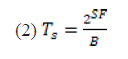
Where B is the signal bandwidth. As many bits of the useful signal are transmitted, the duration of the symbol transmission is longer, and the symbol bitrate is lower. Since one symbol has SF bits, the transmission rate of one bit of information is determined by [13]:
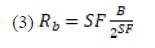
The addition of check bits to the information bits for the detection and recover transmission error purposes results in a further reduction in transmission speed, determined by the coefficient – coding rate (CR). It is determined by the ratio of the number of information bits to the total number of bits sent.
The transmission time of one LoRa frame (Time on Air) depends on the selected frame configuration. To facilitate the calculation of this time, there is a calculator on the Semtech website [14]. With a given LoRa frame configuration, the number of bytes with useful information, the code rate, SF, and bandwidth, the required frame transmission time is calculated, as well as the channel frequency parameters. These are the received signal strength (RSSI), the signal-to-noise ratio (SNR), and the channel budget (Link budget). To determine the last parameter, it is necessary to know the sensitivity of the receiver used and the maximum transmitter power when we receive its highest value. For the 868MHz frequency range, the maximum permissible transmitter power is 14dBm (25mW). With a receiver sensitivity of -130dBm, the channel budget is 144 dBm.
- Architecture of the researched LoRaWAN network
A hybrid LoRaWAN network is used to implement a “smart irrigation system”. The end devices, the gateway and the application server are managed by the service user, and the network server is managed by the service provider The Things Network [15]. The basic architecture of the system includes two MKR WAN 1310 communication modules. Data reception and processing is performed by a 32-bit Arm® Cortex®-M0 SAMD21 processor. The LoRa connection with the gateway is carried out with the CMWX1ZZABZ module from Murata. The LoRa transceiver used in the module is SX1276. The ECC508 module is used to ensure protection of the transmitted information. One end module is located directly next to the area with plants, a soil moisture sensor and a humidity and air temperature sensor are connected to it. The second is located in close proximity to the water tank, to which the drip irrigation system is connected. This module includes a sensor for measuring the water level in the tank, a solenoid valve for starting and stopping water to the drip irrigation system, and a relay for turning on the pump for filling the tank with water. It also includes an alarm for notification in case of problems with the tank. The block diagram and algorithm of the system are shown in Figure 1.
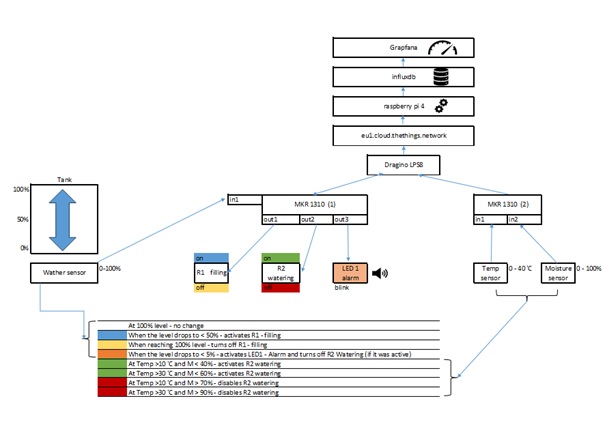
Figure 1. Block diagram of an “intelligent irrigation system”
The gateway is the Dragino LPS8, which provides 10 programmable parallel demodulation channels based on the SX1308. Its location depends on the distances between the two communication modules and is the subject of research. The connection to the Internet depends on its location and can be stationary or mobile. The application server is implemented on the basis of the Raspberry Pi single-board computer. The collected data is stored in a specialized InfluxDB database, and Grafana is used for their graphical presentation. The stored data can be used for statistics for past periods and, if necessary, adjustments can be made to the system settings.
- Survey the gateway coverage area
The public The Things Network, which is freely accessible, was used as a network server. In order to use it, the restrictions introduced by the administrators were taken into account, namely the network connection time was limited to 30 seconds per day (24 hours) per node, and the messages from the server to the end device were limited to 10 messages per day (24 hours) [15]. This was done by using the calculator [14] to calculate the required Time on Air depending on the parameters that can be set with the software for managing the end devices and the gateway. The values of the individual parameters are shown in Figure 2.
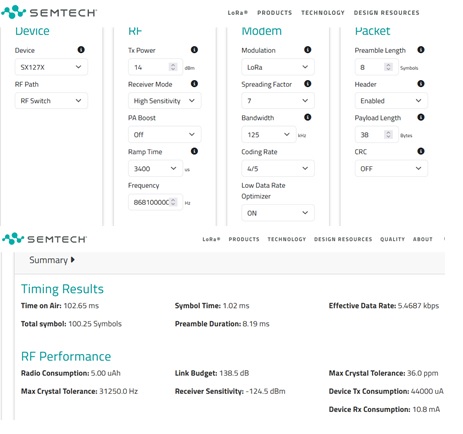
Figure 2. Data from the Semtech calculator
With the selected values of the individual parameters, the time for refreshing the data from the end devices is determined, subject to the restriction – the time for connecting to the network should be up to 30 seconds per day. The data from the end devices are published without receiving acknowledgement from the TTN server. To obtain data on the range of the gateway, in real operating conditions, the TTN Mapper platform was selected. It provides the ability to compile a map with the strength of the received signal from the end device at a specific point. In case the end device does not have a navigation receiver, the built-in receiver in mobile phones can be used. For this purpose, the TTN Mapper application for Android was used. Receiving the data in the TTN Mapper mobile application, their integration with the geographical coordinates of the relevant point and their transmission to the platform TTN Mapper is shown in Figure 3.
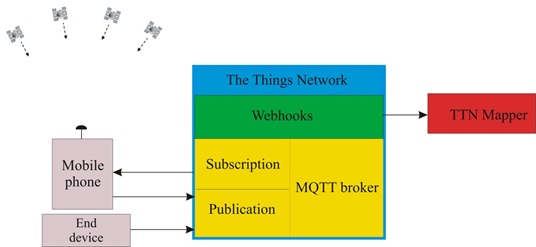
Figure 3. Block diagram of the connection between the individual platforms
To study the coverage, the end device with a temperature and humidity sensor was used. It was placed in close proximity to the phone with the TTN Mapper application installed. To receive the data from this device, the TTN Mapper application on the phone was programmed as a subscriber to the MQTT broker of the The Things Network platform. The metadata associated with the received messages contain the signal strength and connection quality received from the gateway. This metadata is integrated with the geographical coordinates of the corresponding point and sent to the network server. The TTN Mapper platform is connected to the TTN server using the Webhooks method. When data is received in the broker, it is immediately sent for visualization in TTN Mapper. The same data, if desired by the user, can be saved on the phone. It was chosen not to use the coverage visualization offered by TTN Mapper, but to use the data saved in the phone. They were further processed and stored as separate variables that were used to draw the figures. To study the influence of the antenna position, experiments were conducted in which the gateway was located outside a window, on the fourth floor, in a building of the VTU Todor Kableshkov. The gateway antenna is vertical to the ground surface, and the end device (ED) antenna is in a horizontal plane, in the first experiment. The direction of movement is counterclockwise from the location of the gateway. Its location and the locations where the terminal device was are shown in Fig. 4. The positions of the ED are recorded on the figure. The obtained data for the signal strength in the individual positions is shown in Fig. 5. The signal in the 30th position is the weakest, after it its value is less than the receiver sensitivity -124.5dBm (shown in Fig. 2). The distance between the gateway and position 30 is 297m in a straight line.
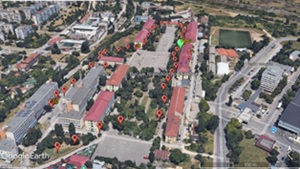
Figure 4. Position of the gateway and end device
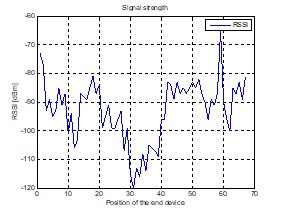
Figure 5. Signal strength at individual positions
A repeat attempt was made along the same route, with only the position of the ED antenna being changed, it was placed vertically relative to the earth’s surface.
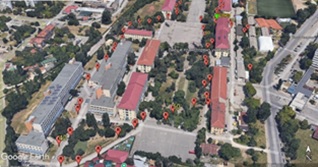
Figure 6. Position of the gateway and end device
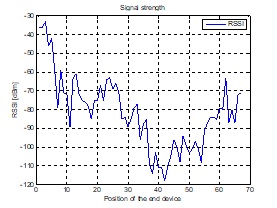
Figure 7. Signal strength at individual positions
The results are shown in Figure 6 and 7. It can be seen that in the area where there was no coverage before, the lowest RSSI value is now -118dBm. This provides a margin of 6.5dBm, with which a greater range of operation of the gateway can be achieved. The farthest distance in a straight line between the gateway and position 43 is 343m.
Conclusion
The projected LoRaWAN network makes it possible to implement a „smart irrigation system“ with affordable materials, at a relatively low cost. Basic dependencies are presented for calculating network parameters necessary for determining the size of the payload and the time during which messages are sent to the network server. The range of the gateway has been tested only in an urban environment, with different polarizations of the antenna of the end device. The experiments were conducted using an antenna without directional action (with a circular diagram). It has been established that the range of action is greater when the polarization of the two antennas (of the ED and the gateway) is the same. In a specific application of the system (the location of the ED and the gateway is known), directional antennas with a higher gain can be used, thus a much greater range of action can be obtained. Taking into account the fact that the system is for use outside populated areas, the coverage will also be greater. The proposed system can be easily expanded by adding new ED, depending on specific needs.
REFERENCES
[1] ASHTON KEVIN, That ‘Internet of Things’ Thing, RFID Journal, 2009, ISSN 1936-7406, http://www.rfidjournal.com/article/view/4986.
[2] IEEE. IEEE Standard for Low-Rate Wireless Networks. IEEE Std 802.15.4-2024 (Revision of IEEE Std 802.15.4-2020), pp. 1 – 967. IEEE, 12 Dec. 2024. DOI: 10.1109/IEEESTD.2024.10794632.
[3] MOKO SMART, What is LPWAN (Low Power Wide Area Network). [online]. Available at: https://www.mokosmart.com/what-is-lpwan-low-power-wide-area-network [Accessed 9 May 2025].
[4] SILVA, M., MARQUES, D., VALADARES, D., FERREIRA, A., Assessment of LoRa Signal Strength in a Building Environment, Preprints 2024, 2024080663, https://doi.org/10.20944/preprints202408.0663.v1
[5] CALLEBAUT, G., LEENDERS G., BUYLE, C., CRUL, S., VAN DER PERRE, L., LoRa Physical Layer Evaluation for Point-to-Point Links and Coverage Measurements in Diverse Environments, in 2019 European Conference on Networks and Communications (EuCNC), Valencia, Spain, 2019, pp. 362 – 366, ISBN 978-1-7281-0306-8, doi: 10.48550/arXiv.1909.08300.
[6] SEYE, M., NGOM, B., GUEYE, B., DIALLO, M., A Study of LoRa Coverage: Range Evaluation and Channel Attenuation Model, 2018 1st International Conference on Smart Cities and Communities (SCCIC), Ouagadougou, Burkina Faso, 2018, pp. 1 – 4, ISBN 978-1-5386-5591-7, doi: 10.1109/SCCIC.2018.8584548.
[7] DE CAMARGO, E., SPANHOL, F., CASTRO E SOUZA, Á., Deployment of a LoRaWAN network and evaluation of tracking devices in the context of smart cities, Journal of Internet Services and Applications, 12(1), Article 8, pp. 1 – 17, ISSN 1869-0238, https://doi.org/10.1186/s13174-021-00138-7.
[8] BLENN, N., KUIPERS, F., LoRaWAN in the Wild: Measurements from The Things Network, arXiv preprint arXiv:1706.03086, pp. 1–10, ISSN 2331-8422, https://doi.org/10.48550/arXiv.1706.03086.
[9] SCHINSCHKE, J., SCHMIETENDORF, A., LoRaWAN Coverage Analysis in the Transportation Sector: A Real-World Approach, Engineering Proceedings, 2022, 27(1), 73, pp. 1 – 7. ISSN 2673-4591, https://doi.org/10.3390/ecsa-9-13321, https://doi.org/10.3390/ecsa-9-13321.
[10] ANGELOV K., N. MANCHEV, P., Kogias and S. Sadinov, Design and Development of a Platform for Test Applications in LoRa/LoRaWAN, Journal of Engineering Science and Technology Review (JESTR), Kavala Institute of Technology, 2019, pp. 17 – 21, ISSN 1791-9320, E-ISSN1791-2377.
[11] ANGELOV, K., MANCHEV, N., SADINOV, S., IVANOV, T., Planning and research of a radio coverage area in a LoRaWAN communication network, International Scientific Conference UNITECH 2020, November 20-21, 2020, Gabrovo, Volume I, pp. I-263-268, 2020, ISSN: 1313-230X.
[12] ALIPIO, M., BURES, M., Current testing and performance evaluation methodologies of LoRa and LoRaWAN in IoT applications: Classification, issues, and future directives, Internet of Things, Volume 25, April 2024, vol. 25, art. no. 101053, Apr. 2024, 35 pp., ISSN 2542-6605, doi: 10.1016/j.iot.2023.101053.
[13] MONTAGNY, S., LoRa – LoRaWAN and IoT, Savoie Mont Blanc University, 240 pp., ISBN 978-2-37741-084-2, https://www.univ-smb.fr/lorawan/en/free-book/.
[14] Semtech Corporation, “LoRa Calculator,” Semtech Design Support, 2024. [Online]. Available: https://www.semtech.com/design-support/lora-calculator.
[15] Things Network, “The Things Network Documentation,” 2024. [Online]. Available: thethingsnetwork.org. [Accessed: May-2024] https://www.thethingsnetwork.org/.
Prof. Dr. Emil Iontchev
ORCID iD: 0009-0005-3585-7084
Department of Telecommunications and Safety Equipment and Systems
Todor Kableshkov University of Transport
158, Geo Milev St., 1574 Sofia, Bulgaria
E-mail: ionchev@vtu.bg
Rashko Vladimirov
ORCID iD: 0009-0001-6600-4675
Department of Telecommunications and Safety Equipment and Systems
Todor Kableshkov University of Transport
158, Geo Milev St., 1574 Sofia, Bulgaria
E-mail: r.vladimirov90@gmail.com
Rosen Miletiev
ORCID iD: 0000-0001-8050-1232
Technical University of Sofia
8, Kl. Ohridski Blvd., 1000 Sofia, Bulgaria
E-mail: miletiev@tu-sofia.bg
Tsvetan Petrov
ORCID iD: 0009-0005-5637-3652
Department of Telecommunications and Safety Equipment and Systems
Todor Kableshkov University of Transport
158, Geo Milev St., 1574 Sofia, Bulgaria
E-mail: ceco_1@abv.bg

Свързани статии:
 The Place and Role of AI in Transport Systems Management
Implementation of Sustainable Indicators for Effective Evaluation and Monitoring of Transport Projects
Job Displacement Due to Favoritism: an Analysis of Challenges for the Employment
Project-based Approach to Risk Management of Transport Company Information Systems
The Place and Role of AI in Transport Systems Management
Implementation of Sustainable Indicators for Effective Evaluation and Monitoring of Transport Projects
Job Displacement Due to Favoritism: an Analysis of Challenges for the Employment
Project-based Approach to Risk Management of Transport Company Information Systems