

Kalin Dimtchev
University of National and World Economy, Sofia, Bulgaria
Tsvetana Stoyanova
University of National and World Economy, Sofia, Bulgaria
https://doi.org/10.53656/igc-2025.24

Pages 261-272
Abstract. Artificial intelligence reshapes how CEOs lead, make decisions and balance technology with people. The aim of this paper is to develop a conceptual hybrid leadership framework that integrates four competency clusters: technological acumen, strategic adaptability, human-centred leadership and ethical stewardship. Using a systematic literature review and interviews with CEOs and HR executives, the study identifies how these competencies are enacted in practice. The proposed model serves as a roadmap for developing CEOs capable of leading AI-enabled transformation.
Keywords: CEO leadership, artificial intelligence (AI), leadership competencies, digital transformation, strategic adaptability
JEL: M12, M15, O33
Introduction
The accelerating integration of artificial intelligence (AI) into organisational processes is fundamentally reshaping executive work. In sectors as diverse as manufacturing, finance and the public sphere, AI-based analytics, decision-support systems and automation are changing not only what organisations do but how they are led (Brynjolfsson & McAfee, 2014; Kovari, 2024). While a substantial body of research has examined digital transformation and its implications for managerial practice (Vial, 2021), far less attention has been paid to the specific ways in which AI alters the skill requirements of chief executive officers (CEOs) and the leadership models needed to navigate this shift.
Classical leadership theories—trait, behavioural, situational and contingency models—assume that leader attributes or styles are relatively stable and that environmental change is incremental (Yukl, 2013). Even contemporary approaches such as transformational or servant leadership focus primarily on human–relational capacities (Avolio & Bass, 2004). Yet, as organisations increasingly deploy AI across strategic and operational domains, CEOs are expected to combine these human-centred competencies with technological literacy, data-driven decision-making and ethical oversight (Seraj et al., 2025; Wang & He, 2024). Recent studies on digital leadership and agile leadership point to the value of technological competence and adaptability (Adie, et al., 2024; Tuyen et al., 2025), but they seldom explore how these elements coexist with relational intelligence and ethical stewardship at the highest executive level. Moreover, the few studies that address executive leadership in AI contexts typically focus on single sectors or specific practices, such as IT adoption or innovation outcomes, rather than on the integrated competency profile required of CEOs (Weber et al., 2022; Wang & He, 2024, Biolcheva, 2025). This leaves a gap in our understanding of how leaders at the apex of organisations actually combine human and technological capacities, and under what contextual conditions such integration succeeds or fails. Scholars have begun to call for more nuanced, system-level perspectives on leadership in digital environments (Uhl-Bien & Arena, 2018; Chatterjee et al., 2023), yet conceptual frameworks that explicitly link AI, leadership competencies and organisational outcomes remain scarce.
This paper addresses that gap by rethinking CEO leadership skills in the AI era and proposing a hybrid leadership model that integrates technological acumen, strategic adaptability, human-centred leadership and ethical-systemic stewardship. Drawing on a systematic review of the literature and semi-structured interviews with CEOs and HR executives from organisations undergoing AI-enabled transformation, the study explores how these competency clusters are understood and enacted in practice. The resulting conceptual framework offers both a theoretical contribution—by bridging leadership and AI studies—and practical guidance for boards, HR executives and policymakers designing leadership development programmes for AI-driven organisational transformation. The aim of this paper is to develop a conceptual hybrid CEO leadership framework that integrates technological, human-centered, strategic, and ethical competencies in the context of AI-driven transformation.
Literature Background
Leadership Theories and Models in the Digital Era
Classical leadership theories – trait, behavioural, situational and contingency approaches – assume that leader attributes or styles are relatively stable and that environmental change is incremental and predictable (Yukl, 2013). In the digital era, however, rapid technological change, pervasive data analytics, artificial intelligence (AI), distributed work and heightened volatility challenge these assumptions. Leaders now operate in settings where uncertainty is high, information is democratized and decision cycles are compressed, making traditional models less able to explain what constitutes effective leadership.
Recent scholarship highlights new forms of leadership emerging under these conditions. Digital leadership emphasises technological literacy, openness to innovation and the capacity to guide business model and process transformation (Seraj et al., 2025). This approach overlaps with transformational and participative styles but adds attention to digital ethics and continuous change. Other studies illustrate how digital leadership is associated with employee innovation and organisational agility (Wang & He, 2024; Adie, et al., 2024) and how contextual factors such as regulatory constraints or leadership tenure shape its enactment (Nurniawan & Amalia, 2025). The evolution of digital project management, as explored by Yordanova (2024a), underscores how leaders must understand process, change, and technology interplay — a premise that supports our technological-acumen cluster. Alongside digital leadership, the notion of agile leadership stresses speed, learning and experimentation, reflecting the demands of volatile, uncertain, complex and ambiguous environments.
Across these strands, three conceptual tensions emerge: the need to balance stability with dynamism, centralised authority with distributed expertise and speed with reflection. There is also a growing expectation that leadership includes technological competence – understanding, governance and ethics – alongside relational and motivational skills. Taken together, the literature suggests that contemporary leadership is moving toward a hybrid form that integrates human-centred and technological capacities. This synthesis informed the design of our interview protocol and underpins the conceptual framework developed later in the paper.
CEO Competencies for the Age of AI
Artificial intelligence (AI), pervasive digitalisation and rapidly shifting competitive landscapes have transformed not only the environment in which CEOs operate but also the competencies they require. Traditional strengths such as vision, integrity and mentoring remain vital, yet they are no longer sufficient on their own. Contemporary research highlights that CEOs now face three simultaneous demands: interpreting and deploying technology, steering transformation under uncertainty and maintaining a human and ethical anchor in increasingly automated organisations (Hu & Sheng, 2022; Weber et al., 2022; Tuyen et al., 2025). In prior research, Sterev and Biolcheva (2022) examine market mechanisms in energy risk management, demonstrating how institutional and regulatory factors frame how managers respond to complexity — parallel to how CEOs must manage AI risks in their firms. Across these studies a converging picture emerges of four interrelated competency clusters essential for CEO leadership in the AI era: technological acumen (AI literacy and integration into strategy and culture), strategic adaptability and innovation orientation (anticipating shifts, experimenting and leading reinvention), human-centred leadership (trust, transparency and alignment of people with change) and ethical-systemic stewardship (governance, fairness and long-term societal impact). These clusters appear across sectors and geographies and were used to structure the semi-structured interviews conducted for this study. Recent bibliometric work by Yordanova (2024b) examines how firms digitalize their innovation processes, highlighting persistent gaps in how leadership aligns with technological change. These gaps motivate exploring CEO roles in AI contexts.
Context matters strongly. Interviewees and prior research alike point to organisational culture, digital maturity, regulatory environment and the strength of C-suite partnerships as factors shaping how competencies are enacted. In regulated sectors, ethical stewardship dominated leaders’ narratives; in more agile contexts, technological openness and adaptability came to the fore. In sum, the emerging competency profile of CEOs in the AI era is multidimensional and hybrid, blending technological, strategic, human and ethical capacities. This synthesis underpins the conceptual framework proposed in the next section, which integrates these clusters and their contextual moderators into a hybrid leadership model for CEOs.
Toward a Hybrid Leadership Model in the AI Era
The synthesis of traditional leadership theories and the competency clusters identified in our literature review and semi-structured interviews points to the need for a hybrid model of CEO leadership. Existing frameworks typically privilege either human-relational dimensions (as in transformational or servant leadership) or technical-structural dimensions (as in digital and agile leadership). Yet the accelerating infusion of AI into strategic decision-making, operations and stakeholder interactions means that CEOs must combine, rather than choose between, these dimensions. This hybrid orientation resonates with what Uhl-Bien and Arena (2018) term “enabling leadership,” which fosters adaptability and learning across networks, but our findings extend this notion by explicitly integrating technological literacy and ethical stewardship as central executive capabilities.
Recent studies reinforce the need for this integration. Tigre, Henriques and Curado (2025) show that CEOs in high-tech industries achieve superior innovation outcomes when they simultaneously display high emotional intelligence and high digital competence, a combination they call “dual-core leadership.” Similarly, Wang & He, (2024) demonstrate that AI readiness at the top-team level mediates the link between CEO strategic adaptability and firm performance, highlighting how technology and human capital cannot be separated in practice. Our interviews echoed these patterns: leaders described AI literacy and human-centred leadership not as competing priorities but as mutually reinforcing, particularly when coupled with ethical governance.
Based on this synthesis, the hybrid leadership model is conceived as a dynamic system linking four interdependent elements:
- the CEO’s human-centred capacities (vision, emotional intelligence, trust building);
- technological acumen (AI literacy, data governance, digital ethics);
- strategic adaptability and innovation orientation; and
- contextual moderators such as organisational culture, regulatory environment and digital maturity.
The model assumes that leadership effectiveness in AI-rich contexts emerges from the interaction of these elements rather than from any single competency or style. The themes that surfaced in our semi-structured interviews were organised into these four dimensions and directly informed the model. Table 1 compares dominant leadership frameworks with the proposed hybrid model and shows how it reconfigures their underlying assumptions for the AI era.
Table 1. Key Dimensions Differentiating Classical, Digital/Agile, and Proposed Hybrid Leadership Models
| Dimension | Classical/ Transformational Leadership | Digital/Agile Leadership | Proposed Hybrid Leadership Model (AI Era) |
| Core Focus | Vision, motivation, follower development | Technology adoption, agility, process speed | Integration of human-centered and technological capacities |
| Competency Emphasis | Emotional intelligence, ethical values, strategic vision | Technological literacy, rapid iteration, openness to innovation | Emotional intelligence + AI literacy + strategic adaptability + ethical stewardship |
| Authority Structure | Primarily top-down with some participative elements | Distributed, cross-functional, iterative | Dynamic blending of distributed decision-making and CEO orchestration |
| Time Orientation | Long-term vision with incremental change | Short cycles, experimentation, pivoting | Long-term resilience through continuous transformation |
| Key Outcomes | Commitment, culture, employee performance | Digital transformation, process efficiency | Sustainable innovation, trust, AI governance, competitive advantage |
This hybrid model departs from existing theories by treating human and technological capacities as mutually constitutive rather than additive. Interviewees frequently described how their ability to exercise emotional intelligence, cultivate trust and motivate teams was strengthened – not undermined – by technological literacy when applied ethically and strategically. Conversely, they warned that AI literacy without human-centred leadership risks technocracy, ethical lapses and resistance. The model also recognises the importance of context: digital maturity, regulatory pressures and stakeholder expectations can either enable or constrain hybrid leadership. These contextual moderators appeared repeatedly in both the literature and our interviews, underscoring the need for a flexible, system-level approach. Although this paper does not test the model quantitatively, the themes derived from the semi-structured interviews provide a grounded conceptual foundation. Future research could empirically validate the model across larger samples and sectors, develop indicators for each competency cluster, and explore how contextual factors influence their interaction. For practitioners, the hybrid leadership model offers a roadmap for boards, HR executives and policy makers seeking to develop CEOs capable of leading AI-driven transformation responsibly and effectively.
Methodology
This study adopts a qualitative, exploratory research design to examine how chief executive officers (CEOs) and senior human resource (HR) executives understand and enact leadership competencies in the age of artificial intelligence (AI). Rather than seeking to test hypotheses or measure variables statistically, the objective is to generate rich, contextualised insights that inform the development of a conceptual framework for hybrid CEO leadership. The approach combines a systematic review of the leadership and AI literature with semi-structured interviews of executive leaders, enabling both theoretical breadth and experiential depth (Creswell & Creswell, 2017; Yin, 2018).
The qualitative design was chosen because the phenomenon under investigation – the adaptation of executive leadership competencies to AI-intensive contexts – is complex, multifaceted and not yet well theorised. Semi-structured interviews allow participants to describe their perceptions, experiences and practices in their own words while giving the researcher latitude to probe emergent themes (Braun et al., 2024). Themes from the literature review (technological acumen, strategic adaptability and innovation orientation, human-centred leadership, and ethical-systemic stewardship) guided the development of the interview protocol.
We recruited a purposive sample of executive leaders from organisations undergoing digital or AI-enabled transformation. The initial sample comprised 12 CEOs and 9 senior HR executives representing a range of industries (ICT, outsourcing, manufacturing, financial services, public administration) and organisational sizes. Participants were selected because they hold direct responsibility for strategic decision-making and leadership development in contexts where AI integration is underway. This diversity of roles and sectors enhances the transferability of the findings beyond a single industry (Chatterjee et al., 2023). Semi-structured interviews were conducted between June and September 2025. Each interview lasted approximately 45 – 60 minutes and was conducted via secure videoconference to accommodate geographically dispersed participants. The interview guide contained open-ended questions clustered around the four competency domains identified in the literature (e.g., “How do you approach decisions involving AI systems?” “How do you build trust when delegating decisions supported by AI?”). All interviews were audio-recorded with participant consent and transcribed verbatim.
We analysed the interview transcripts using reflexive thematic analysis (Braun et al., 2024). This involved iterative coding of the data, identification of patterns and contrasts, and synthesis of themes into higher-order categories corresponding to the emerging hybrid leadership model. NVivo [or other software] was used to assist with data management and to maintain an audit trail of coding decisions. Thematic saturation was monitored to ensure that no substantially new themes were emerging after successive interviews. To enhance the credibility and trustworthiness of the findings, we employed several strategies. Two researchers independently coded a subset of transcripts and discussed discrepancies until consensus was reached. Emerging themes and preliminary interpretations were shared with a small panel of ICT executives familiar with AI-driven transformation to solicit feedback on clarity and plausibility. This form of member checking helped refine both the thematic structure and the resulting conceptual framework (Yin, 2018).
The qualitative analysis generated a set of interrelated themes describing how CEOs perceive and enact technological, strategic, human and ethical competencies in AI contexts. These themes were synthesised with insights from the literature to develop the hybrid leadership model presented in Section 4. In line with the exploratory nature of the study, the model is offered as a conceptual foundation for future research, including quantitative validation across larger samples and contexts.
Discussion and Recommendations
The analysis of our semi-structured interviews, combined with the systematic literature review, reveals that effective CEO leadership in AI-intensive contexts is characterised less by any single dominant style and more by the ability to integrate technological, strategic, human and ethical capacities. Across interviews, participants repeatedly described navigating the tension between technical expertise and human-centred leadership. This pattern reinforces the propositions developed in the Literature Background section, where classical leadership models are contrasted with digital and hybrid leadership expectations in AI-intensive environments; they must be reframed as part of a hybrid model that reflects the complexities of digital transformation.
Interviewees provided rich, experience-based examples of how they enact these competencies. Several CEOs described how learning to “speak the language of AI” enabled them to ask better strategic questions and to challenge data-driven recommendations without undermining technical experts. Others stressed that empathy and trust building had become more – not less – important when algorithms were involved in decision-making, because employees and stakeholders needed reassurance about transparency, fairness and ethical use. These qualitative insights echo recent conceptual work on “dual-core leadership” (Tigre et al., 2025) and “enabling leadership” (Uhl-Bien & Arena, 2018), but extend it by illustrating how leaders actually combine these capacities in daily practice. Another strong theme concerns context. Organisational culture, regulatory environment and digital maturity shaped how far CEOs could implement hybrid leadership. In highly regulated sectors, ethical stewardship and AI governance dominated interviewees’ narratives; in agile technology firms, strategic adaptability and experimentation were central. This resonates with Adie, et al. (2024) findings that institutional constraints moderate the effectiveness of digital leadership and supports calls for leadership research embedded in situational settings (Chatterjee et al., 2023). Future research should therefore examine boundary conditions such as industry, firm size and regional governance regimes when testing hybrid leadership models.
From a managerial perspective, our findings highlight that preparing CEOs for the AI era cannot be confined to isolated training modules on digital literacy or, conversely, to soft-skills coaching. Instead, boards and HR executives should design integrated development programmes that cultivate all four competency clusters simultaneously. Practical steps mentioned by interviewees included cross-functional rotations with technology teams, joint learning sessions on data analytics and ethics, and mentoring structures exposing CEOs to diverse stakeholder perspectives. Several participants also suggested peer-to-peer CEO forums on AI ethics as a way of sharing practices and dilemmas. Figure 1 below presents the Hybrid CEO Leadership Model developed from the literature and interview insights. It shows the four competency clusters (petals), their interconnections (curved arrows), the contextual moderators (outer ring) and the organisational outcomes (box at the right). Feedback arrows indicate how outcomes can, over time, reshape the context.
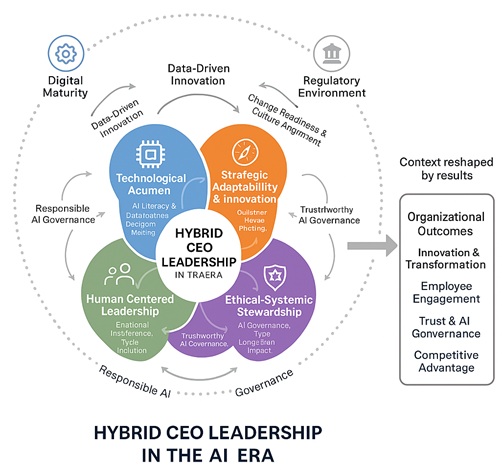
Figure 1. Hybrid CEO Leadership Model in the AI Era developed from literature review and semi-structured interviews
The model also has implications for policy and governance. As CEOs gain greater access to AI-driven insights and decision-support tools, the risk of over-reliance or ethical blind spots increases. Hybrid leadership requires not only technical proficiency but also the courage and systems thinking to question algorithmic outputs, maintain transparency and align AI use with organisational values and societal expectations (Rakovic et al., 2024). Boards, investors and regulators may need to incorporate explicit criteria for AI governance and ethical stewardship into CEO selection and evaluation processes.
In conclusion, the discussion of interview findings confirms that the hybrid leadership model proposed here offers a more comprehensive and realistic depiction of CEO leadership in the AI era than existing frameworks. It integrates theoretical strands that have hitherto been treated separately and yields actionable recommendations for leadership development. By situating technological competence alongside strategic adaptability, relational intelligence and ethical stewardship, the model provides a roadmap for both scholars and practitioners seeking to understand and shape executive leadership in a rapidly evolving digital landscape.
Conclusion
This paper explored how CEOs adapt their leadership competencies in AI-intensive environments. Based on a systematic literature review and interviews with CEOs and senior HR executives, the study identifies four interdependent competency clusters—technological acumen, strategic adaptability, human-centred leadership, and ethical-systemic stewardship—and integrates them into a hybrid leadership framework. The model contributes to leadership theory by bridging human and technology-focused perspectives and illustrates how CEOs combine technical and relational capacities in practice. For organisations, the framework serves as a guide for CEO development in AI-driven transformation. Future research should validate the model across different industries and investigate how contextual factors shape the development of hybrid leadership capabilities as well as their motivation (Dimitrov, 2023).
Acknowledgement
This research has been supported by University of National and World Economy, Research program, NID NI 8/2024.
References
Adie, U. B., Tate, M., & Valentine, E. (2024). Digital leadership in the public sector: A scoping review and outlook. International Review of Public Administration, 29(1), 42 – 58. https://doi.org/10.1080/12294659.2024.2323847.
Avolio, B. J., & Bass, B. M. (2004). Multifactor leadership questionnaire: Manual and sampler set. (3rd Ed.). Mind Garden.
Biolcheva, P. (2025). Artificial intelligence as a risk treatment tool in the circular economy. Industrial Growth Conference 2024, 49 – 59. https://doi.org/10.53656/igc-2024.05.
Braun, V., Clarke, V., Hayfield, N., & Terry, G. (2024). Thematic analysis. In P. Liamputtong (Ed.), Handbook of Research Methods in Health Social Sciences (pp. 843 – 860). Springer.
Brynjolfsson, E., & McAfee, A. (2014). The second machine age: Work, progress, and prosperity in a time of brilliant technologies. Business Horizons, (5), 685 – 688.
Chatterjee, S., Chaudhuri, R., Vrontis, D., & Giovando, G. (2023). Digital workplace and organization performance: Moderating role of digital leadership capability. Journal of Innovation & Knowledge, 8(1), 100334. https://doi.org/10.1016/j.jik.2023.100334.
Creswell, J. W., & Creswell, J. D. (2017). Research design: Qualitative, quantitative, and mixed methods approaches. Sage publications.
Dimitrov, K. (2023). The impact of work motivation on job satisfaction with mediating effect of key work behaviour variables: A Bulgarian case of Generation Z employees. SHS Web of Conferences, 176, 04002. https://doi.org/10.1051/shsconf/202317604002.
Hu, D., & Sheng, K. (2022). Research on the constituent elements of CEO competency under the background of digital economy. Frontiers in Economics and Management, 3(7), 87 – 92.
Kovari, A. (2024). AI for decision support: Balancing accuracy, transparency, and trust across sectors. Information, 15(11), 725. https://doi.org/10.3390/info15110725.
Nurniawan, H., & Amalia, D. (2025). The effect of digital leadership on organizational agility through employee competence in MSMEs in Purwakarta. Digital Financial Accounting Management Economics Journal, 3(1). https://doi.org/10.61434/dfame.v3i1.271.
Rakovic, L., Maric, S., Milutinovic, L. D., Vukovic, V., & Bjekic, R. (2024). The role of leadership in managing digital transformation: A systematic literature review. E&M Economics and Management, 27(2), 87 – 107. https://doi.org/10.15240/tul/001/2024-2-006.
Seraj, A. H. A., Hasanein, A. M., Al-Romeedy, B. S., & Elziny, M. N. (2025). Redefining the digital frontier: Digital leadership, AI, and innovation driving next-generation tourism and hospitality. Administrative Sciences, 15(9), 369. https://doi.org/10.3390/admsci15090369.
Sterev, N., & Biolcheva, P. (2022). Market mechanisms for risk management in energy. Economic Alternatives, 1(8), 132 – 141.
Tigre, F. B., Henriques, P. L., & Curado, C. (2025). The digital leadership emerging construct: a multi-method approach. Management Review Quarterly, 75(1), 789 – 836.
Tuyen, B. Q., Hung, T. H., & Lan, M. T. (2025). Leadership characteristics and digital transformation in an emerging market: The moderating effect of compliance pressure. International Review of Economics & Finance, 98, 103944. https://doi.org/10.1016/j.iref.2025.103944.
Uhl-Bien, M., & Arena, M. (2018). Leadership for organizational adaptability: A theoretical synthesis and integrative framework. The leadership quarterly, 29(1), 89 – 104. https://doi.org/10.1016/j.leaqua.2017.12.009.
Vial, G. (2021). Understanding digital transformation: A review and a research agenda.
In A. Hinterhuber, T. Vescovi, F. Checchinato (Eds.), Managing Digital Transformation (pp. 13 – 66). Routledge.
Wang, Y., & He, Z. (2024). CEO discretion and enterprise digital transformation. Heliyon, 10(1), e23468. https://doi.org/10.1016/j.heliyon.2023.e23468
Weber, E., Krehl, E. H., & Büttgen, M. (2022). The digital transformation leadership framework: Conceptual and empirical insights into leadership roles in technology‐driven business environments. Journal of Leadership Studies, 16(1), 6 – 22. https://doi.org/10.1002/jls.21810.
Yin, R. K. (2018). Case study research and applications: Design and methods. (6th Ed). Sage.
Yordanova, Z. (2024a). Digital transformation of project management. In: K. Arai (Ed.), Advances in Information and Communication Proceedings of the 2024 Future of Information and Communication Conference (FICC), Volume 3 (pp. 258 – 268). Springer Nature.
Yordanova, Z. (2024b). Digital transformation of the firm’s innovation process – a bibliometric analysis. Economic Alternatives, (3), 508 – 528.
Yukl, G. (2013). Leadership in organizations. (8th Ed.). Pearson.
Kalin Dimtchev
Department Management
University of National and World Economy
19, December 8th St.
1700 Sofia, Bulgaria
E-mail: kdimchev_2383064@unwe.bg
Prof. Tsvetana Stoyanova, PhD
Department Management
University of National and World Economy
19, December 8th St.
1700 Sofia, Bulgaria
E-mail: tsvetana_stoyanova@unwe.bg

Свързани статии:
 DIGITAL CHALLENGES IN ONLINE RETAILERS: IDENTIFYING BARRIERS TO SUSTAINABLE TRANSFORMATION
INTEGRATING LEAN PRINCIPLES WITH DIGITAL TECHNOLOGIES FOR THE IMPROVEMENT OF PRODUCTION MANAGEMENT
THE IMPACT OF TECHNOLOGICAL INNOVATIONS ON ATTRACTING NEW AUDIENCES IN CULTURAL ORGANIZATIONS
AI AND EMPLOYER BRANDING: OPPORTUNITIES AND ETHICAL DILEMMAS IN TALENT ATTRACTION

