
Dobrin Ganchev
Technical University of Gabrovo, Bulgaria
Sergey Naydenov
D. A. Tsenov Academy of Economics, Svishtov, Bulgaria
https://doi.org/10.53656/igc-2025.05

Pages 53-62
Abstract. The national economy and its sectors are facing the most serious challenge since the beginning of the transition to a market economy, accompanied by a shift in the economic, political, and social system and reorientation toward countries with developed democracies. In order to assess the challenges facing the national economy, it is necessary to conduct an analysis in two directions: the internal economic situation in all its complexity, and the dynamic external environment, characterized by several international conflicts.
The purpose of this paper is to provide some guidelines and outline prospects for the development of the national economy, primarily in the short term, and to the extent possible, using the available tools in the hands and minds of the researchers. To achieve this goal and fulfill the tasks at hand, methods such as analysis, synthesis, induction, desk research, and others will be employed.
Keywords: Eurozone; euro; economic activity; foreign direct investment
JEL: O10, M21
Introduction
The accession of our country to the European Monetary and Financial Union is an event of exceptional importance and represents a kind of final stage in the overall reorientation toward European values. In this context, the replacement of the national currency – the lev – with the common European currency – the euro – is a highly significant milestone in our recent history. It constitutes a cornerstone in public finance, as by joining the European family, our country undertakes commitments of cooperation, solidarity, and mutual assistance with the other Eurozone member states. The accession process itself is in its final phase, with only a few remaining steps of an organizational and technical nature needed to prepare for the euro’s introduction into circulation.
The Bulgarian economy has undergone significant changes and transformations. It went through a radical shift in ownership, structural reform, and a national crisis at the end of 1996, marked by hyperinflationary shocks, the collapse of key structural enterprises, and the devaluation of the national currency. A logical and economically and financially justified step, adopted by national consensus, was the introduction of the currency board system in July 1997, which pegged the Bulgarian lev to the German mark, and later to the European currency unit, at a fixed exchange rate. The adoption of the currency board rules meant that the Bulgarian National Bank relinquished its ability to conduct independent monetary policy. It became unable to issue Bulgarian levs unless fully backed by corresponding foreign currency assets and other financial instruments.
Analysis of the economic situation
It is well known that the main indicator of a country’s economic activity is the Gross Domestic Product (GDP). Its expression in comparable 2020 prices over a twenty-year period (2005–2024) shows a significant increase of 162.29% (see Table 1).
Table 1. Gross Domestic Product of the Country at Comparable Prices for the Period 2005–2024
| Year | 2005 | 2006 | 2007 | 2008 | 2009 | 2010 | 2011 |
| GDP
thousand BGN |
87642 | 93604 | 99832 | 105952 | 102405 | 103998 | 106172 |
| Year | 2012 | 2013 | 2014 | 2015 | 2016 | 2017 | 2018 |
| GDP
thousand BGN. |
106967 | 106386 | 107396 | 111045 | 114406 | 117548 | 120544 |
| Year | 2019 | 2020 | 2021 | 2022 | 2023 | 2024 | |
| GDP
thousand BGN. |
125112 | 121088 | 130510 | 135781 | 138343 | 142231 |
Source: National Statistical Institute (NSI), own calculations.
It should be noted that GDP grew at a steady pace during the years following 2005: by 6.8% in 2006 compared to 2005, by 6.65% in 2007, and by 6.13% in 2008. These years, which coincided with Bulgaria’s full membership in the European Union, were marked by stable economic growth at the end of an economic cycle.
The financial crisis that began in 2009 in the United States quickly evolved into a global financial crisis. However, it did not only affect capital markets – it soon developed into a global economic crisis that deeply impacted emerging markets, including Bulgaria. The GDP declined by -3.35% in 2009 compared to 2008. In 2010, a minimal growth of 1.56% was recorded, followed by a 2.09% increase in 2011. GDP grew by just over 0.5% in 2012, followed by a slight decline of 0.5% in 2013 due to lingering aftershocks from the crisis. From 2014 to 2019 – until the onset of the pandemic, GDP experienced steady growth, with annual chain-based increases of 1%, 3.4%, 3%, 2.75%, 2.55%, and 3.8% respectively during this subperiod. See Figure 1.
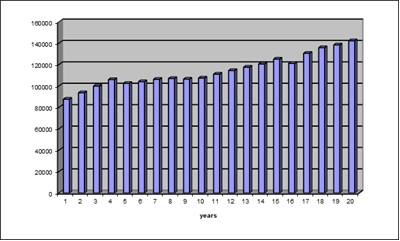
Figure 1. GDP at Comparable Prices for the Period 2005–2024
Source: National Statistical Institute (NSI), own calculations based on Table 1.
The pandemic situation, disruptions in supply chains, and mandatory individual isolation undoubtedly tested the flexibility and resilience of economic systems both in Bulgaria and globally. In 2021, Bulgaria’s GDP grew by 7.78% compared to 2020; in 2022, it increased by 4.04% compared to the previous year; in 2023, by 1.89%; and in 2024, by 2.81%.
In addition to this, the complicated international situation – due to the conflict in Ukraine, the sanctions imposed on the Russian Federation, and the problems with oil and gas supplies, which are essential for the functioning of the economy and social infrastructure – also had an impact. This issue was resolved relatively quickly through diversification of sources. The sectors of our national economy, or at least most of them, managed to adapt.
It is a well-known fact that small and medium-sized enterprises (SMEs) are the backbone of every economy, including Bulgaria’s. In the country, there are 763 large enterprises, while the total number of active enterprises amounts to 387,000. These employ three-quarters of all employed people. Undoubtedly, the geopolitical situation influences the economic environment. Following that are issues such as political instability, the lack of a stable parliamentary majority, the use of corrupt practices, an ineffective judicial system, and an unstable legislative framework.
All these factors, taken together, create serious challenges for Bulgarian entrepreneurs and managers. The results for 2023 – 2024, which highlight the largest companies in the country, deserve respect. Leading the rankings by net sales, among the hundred largest companies are: Lukoil Neftochim Burgas, Aurubis, Lukoil Bulgaria, Astra Bioplant, NEK, BIEY GLAS Bulgaria, Bulgargaz, AKSPO Bulgaria, and Kaufland. They represent sectors such as fuels, energy, metals, glass, and retail trade. Their total sales revenue for 2023 amounts to BGN 42,824,103 while the net revenues of the top ten companies in 2022 amounted to BGN 55,175,648 (Stanchev, 2025a, p. 18).
The revenue dynamics are due to various reasons. Sectoral analysis sheds some light on the causes of significant revenue fluctuations over the two periods. Commercial companies in the energy sector registered a significant decline in their revenues, exceeding 40% compared to 2022. The reasons lie in the favorable economic conditions of hydrocarbon prices, which have been increasingly replaced by representatives of green energy.
In some sectors related to clothing and textile production, revenues also declined. Paradoxically, the food industry reported weaker results as well, mainly due to raw material problems affecting the entire supply chain for final product manufacturing. Other sectors experiencing declines include the production of metal products, fuels, and transportation.
The highest revenue growth in 2023 – 39% – was recorded by enterprises in the defense industry, new car trade with around 30% growth, and companies engaged in the design and construction of solar parks. One of the most dynamic and rapidly developing sectors is the construction of renewable energy sources (RES) and battery storage. According to the Agency for Sustainable Economic Development, over 1000 MW of new solar capacity were introduced into the energy system in 2024. Since the beginning of 2025, an additional 300 MW of solar installations have come online. This brings the total capacity to 4500 MW, representing around a 30% increase in one year.
An important place is occupied by energy storage systems, i.e., solar batteries, which provide the ability to accumulate and use energy during nighttime hours (Stanchev, 2025b, p. 5). It is necessary to emphasize that high-tech manufacturing will contribute to increasing the competitiveness of the national economy.
Foreign direct investment plays an important role in economic development (see Table 2 and Figure 2). It is a fundamental truth that skillfully guided foreign capital flows accelerate economic growth, develop individual sectors of the national economy, and improve material well-being. Foreign investments have a long history, as the first investment placements were made under a fundamentally different economic system during the 1970s. The real investment boom was recorded immediately after our country’s accession to the European Union.
Table 2. Foreign Direct Investment in the Country for the Period 2015 – 2024
| Ind. Year | 2015 | 2016 | 2017 | 2018 | 2019 |
| FDI in Bulgaria (million euros) | 1998,5 | 939,8 | 1605,6 | 967,5 | 1639,4 |
| Ind. Year | 2020 | 2021 | 2022 | 2023 | 2024 |
| FDI in Bulgaria (million euros) | 2761,1 | 1435,9 | 4127,8 | 4634,5 | 2854,5 |
Source: Bulgarian National Bank (BNB), own calculations.
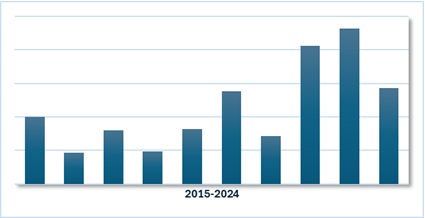
Figure 2. Foreign Direct Investment in the Country for the Period 2015 – 2024
Source: Bulgarian National Bank (BNB), own calculations based on Table 2.
The largest volume of foreign direct investments (FDI), amounting to €9,051.8 million, was registered in 2007, followed by €6,727.8 million in 2008. After that, the volume declined due to various internal and external reasons. It is important to note the impact of the first economic crisis of the 21st century in 2008 – 2009, which began as a financial crisis in the USA and gradually transformed into a global economic crisis. During the last decade, FDI inflows in the country have fluctuated between €1 billion and €3 billion, with exceptions in 2022 and 2023, when they exceeded €4 billion. The ratio of foreign direct investments to gross domestic product (GDP) has ranged between 2.15% and 6.55%, with an average ratio of 4.61% for the period 2020 – 2025. This places Bulgaria in a favorable position compared to former socialist countries. By comparison, countries like Estonia, Latvia, Lithuania, and Slovakia have an average ratio of 3.3 over the past three years. In contrast, countries that have not yet adopted the euro – such as the Czech Republic, Poland, Romania, and Bulgaria – have a ratio of 3.8. The inflow of foreign capital is unstable and volatile, with investment activity being highly unpredictable. The conclusion is that membership in the Eurozone does not provide any advantages concerning foreign capital inflows.
The data indicate that the Southwest region (where the capital city is located) is a clear leader in investment attractiveness, followed closely by the Southcentral region, where the city of Plovdiv is situated (see Table No. 3). The regions ranking lowest are the Northcentral and Northwestern regions, with the investment attractiveness coefficient of the latter being less than half that of the top-ranked region.
Table 3. Level of Investment Attractiveness by Statistical Regions
| Statistical regions | Attractiveness coefficient |
| NORTHWESTERN | 0,22 |
| NORTHCENTRAL | 0,27 |
| NORTHEASTERN | 0,28 |
| SOUTHEASTERN | 0,30 |
| SOUTHWESTERN | 0,48 |
| SOUTHCENTRAL | 0,45 |
Source: Authors’ calculations based on NSI and BNB regional data.
Regarding the attraction of foreign direct investments, the Southwestern region is the leader with over €17 billion invested. The Southcentral and Southeastern regions hold the second and third places respectively. The ranking shows that Southern Bulgaria has attracted 83.73% of all foreign capital. The Northeastern region ranks fourth with 8.84% of investments, while the Northcentral and Northwestern regions hold fifth and sixth places, with 5.12% and 2.31% respectively.
In conclusion, it should be noted that foreign capital is characterized by its volatility. This depends on a variety of conditions in the countries receiving foreign investment flows. This fully applies to both Bulgaria and the other Eastern European countries that are members of the European Monetary and Financial Union.
Macroeconomic forecasts for 2025 are optimistic. At the same time, some authors emphasize potential risks and argue against Bulgaria’s entry into the Eurozone, pointing to possible negative distributional and social effects1. The supporting arguments span several areas. The key questions we need to address are: What is the current structure of the national economy, and secondly, which sectors are likely to grow in order to boost its competitiveness within an open and multi-million market – not only in the Eurozone but also across the entire European Union? This is where the efforts of the relevant executive and legislative authorities should be focused.
It should be noted that our country is in the final phase of the accession process to the European Monetary and Financial Union. Following the positive assessment from the convergence report by the European Commission and the European Central Bank on June 4, 2025 (European Central Bank, 2024), a favorable vote was also cast by the Council of Heads of State and Government of the Eurozone at the end of the same month. The final step was the vote in the European Parliament and the decision of the Economic and Financial Affairs Council on July 8. Positive decisions from both institutions are now in place. Thus, Bulgaria’s full membership as of January 1, 2026, becomes a reality. With this final step, the process of integrating our country into the European structures is brought to a convincing and unequivocal conclusion.
From this point onward, the most important actions are those that Bulgarian institutions and state authorities must undertake to ensure that the process of adopting and introducing the euro into circulation proceeds smoothly under conditions of “informed” consent. In this way, the prerequisite for a natural exit from the currency board system is in place. The public awareness campaign should be directed not only toward explaining the rules, procedures, and specific features of the transition but also toward addressing the shortcomings of the national economy and existing market imperfections.
According to recent studies, the euro-denominated prices of energy commodities on international markets are expected to decline throughout the forecast period due to crude oil trends. However, the prices of natural gas and electricity are expected to rise in 2025. Market participants anticipate that the price of natural gas in Europe will increase on an annual basis in 2025, primarily due to heightened geopolitical uncertainty – including the expiration of the gas transit agreement with Russia via Ukraine at the beginning of the year – as well as increased demand for liquefied natural gas (LNG). Afterward, prices are expected to decline somewhat on a quarterly basis in the first quarter of 2026. Assumptions also indicate that electricity prices will increase on an annual basis in 2025 and during the first quarter of 2026 (Bulgarian National Bank, 2025).
The main channel through which the trade war is expected to affect economic activity in Bulgaria is via foreign trade flows. The share of the United States in Bulgaria’s exports is relatively small. According to statistics on gross foreign trade turnover for 2024, 2.5% of Bulgaria’s goods exports in nominal terms – amounting to €1.1 billion – were destined for the U.S. (European Central Bank, 2024).
The role of the Bulgarian National Bank (BNB) is critically important in the period leading up to the end of 2025. Alongside the government, it is one of the key institutions responsible for the smooth transition to the new currency and for all activities related to the delivery of euro banknotes and the minting of euro coins bearing Bulgarian national symbols.
The Bulgarian National Bank (BNB) will become part of the Eurosystem – the community of the European Central Bank (ECB) and the national central banks of the Eurozone. Once the euro becomes our national currency, the structure of the foreign exchange reserves will change. Upon joining the Eurozone, the BNB will contribute a capital contribution, reflecting its institutional participation in the ECB’s capital, as well as a reserve contribution, representing the transfer of a relatively small portion of its international reserves, in accordance with the proportions established in the ECB’s Statute and the Treaty2. As assured by the Governor of the Bulgarian National Bank (BNB), the majority of the international reserves will remain under the direct and immediate management of the BNB, in line with established principles (see Table No. 4). The assets of the „Issue Department“ have reached nearly BGN 80 billion. The BGN equivalent is determined based on the official exchange rate of the lev to the euro (1 euro = 1.95583 BGN). The monetary aggregate M1, expressed in euros, amounts to €14,992,643.53. Monetary gold, which is a component of the country’s international foreign exchange reserves, accounts for 9.05%, while the BNB’s investments in securities make up 46.71%. Cash and deposits in foreign currency placed with other institutions represent 44.24%.
Table 4. Issue Department balance sheet, 30.06.2025
| ASSETS | Thousand BGN. | LIABILITIES | Thousand BGN. |
| Cash and deposits in foreign currency | 35262424 | Banknotes and coins in circulation | 29323062 |
| Monetary gold and other instruments in monetary gold | 7213814 | Liabilities to banks | 23012661 |
| Investments in securities | 37232484 | Liabilities to the government and budgetary organizations | 11862818 |
| 0 | Liabilities to other depositors | 1275945 | |
| 0 | Deposit of the Banking Department „ | 14234236 | |
| TOTAL ASSETS | 79708722 | TOTAL LIABILITIES: | 79708722 |
Source: Bulgarian National Bank (BNB), Issue Department balance sheet, 30.06.20253.
It should be emphasized that in the remaining few months before the introduction of the euro on January 1, 2026, it is necessary to intensify the informational and awareness campaign, targeting specific groups such as pensioners, citizens with special needs, individuals with lower educational attainment, and those living in remote regions. It is also essential to support representatives of small and medium-sized enterprises, as well as small-scale entrepreneurs, in terms of organizational and technical aspects.
Conclusions and Recommendations
– Full membership in the Eurozone cannot be regarded as a decisive factor for attracting foreign direct investment or for overcoming regional disparities.
– The Bulgarian economy and its sectors will face the challenge of enhancing their competitiveness.
– Extraordinary efforts are required from specialized state authorities, such as the Commission for Protection of Competition and the Consumer Protection Commission, regarding price monitoring in the coming months until the end of the year.
– Monitoring of “domestic” pro-inflationary factors should be implemented.
Acknowledgement to the support by the Technical University of Gabrovo under the grant NIP 2025-22.
NOTES
- https://epicenter.bg/article/Argumentite-na-prof-Rumen-Gechev-sreshtu-vlizaneto-na-Balgariya-v-evrozonata/386718/4/0
- https://manager.bg/menidzar-06-25/polzite-ot-evrozonata-sa-sastestveni-i-dalgosrochni-intervu-s-dimitar-radev-upravitel-na-bnb
- Bulgarian National Bank – Statistics: Issue Department balance sheets. https://www.bnb.bg/Statistics/StHistoricalData/StBNBBalances/StBalancesIssueDepartment/StBIDMonthly/index.htm?date=30.06.2025&archiveYear=
References
Bulgarian National Bank. (2025). Prognoza za osnovni makroikonomicheski pokazateli za 2025–2027 godina. Makroikonomicheska prognoza, 6 – 10. https://www.bnb.bg/AboutUs/ResearchAndPublications/PubPeriodical/PubP_MacroeconomicForecast/index.htm?forYear=2025. [In Bulgarian]
European Central Bank. (2024). Convergence report, June 2024. https://www.ecb.europa.eu/press/other-publications/convergence/html/ecb.cr202406~475c2172bc.en.html.
Stanchev, I. (2025a). Slantse na baterii. In: Nai-golemite investitsii vav VEI i baterii (p. 18). Ikonomedia. [In Bulgarian]
Stanchev, I. (2025b). Top 30 na nai-golemite solarni parkove v Bulgaria. In: Nai-golemite investitsii vav VEI i baterii (p. 5). Ikonomedia. [In Bulgarian]
Assoc. Prof. Dobrin Ganchev, PhD
ORCID iD: 0000-0001-7039-578X
Department of Social and Economic Sciences
Technical University of Gabrovo
4, Hadzhi Dimitar St.
5300 Gabrovo, Bulgaria
E-mail: dobrin@tugab.bg
Assoc. Prof. Sergey Naydenov, PhD
ORCID iD: 0000-0001-7015-7116
Department of Industrial Business and Entrepreneurship
D. A. Tsenov Academy of Economics
2, Emanuil Chakarov St.
5250 Svishtov, Bulgaria
E-mail: s.naydenov@uni-svishtov.bg

Свързани статии:
 ROLE AND PLACE OF THE COMPANY MOTTO IN THE OFFICIAL CULTURE OF BUSINESS ORGANIZATIONS IN BULGARIA
TECHNOLOGICAL INNOVATIONS AND SUSTAINABLE DEVELOPMENT OF EUROPEAN SMALL AND MEDIUM-SIZED ENTERPRISES IN THE FOOD INDUSTRY
PUBLIC ADMINISTRATION THROUGH THE AGES: HISTORICAL MODELS, INSTITUTIONAL TRANSFORMATIONS, AND CONTEMPORARY PARADIGMS
DIGITAL CHALLENGES IN ONLINE RETAILERS: IDENTIFYING BARRIERS TO SUSTAINABLE TRANSFORMATION

