
Amela Muratović,
Admir Muratović,
Kimeta Hamidović
University of Novi Pazar (Serbia)
https://doi.org/10.53656/ped2026-1.05
Abstract. Realization of the activities of preschool children in preschool institutions that represent cultural elements and traditional values are valid elements of the educational tasks of modern preschool education. The task of this paper is to determine to which extent the contents of the current preschool program in the Republic of Serbia encourage educators to implement activities aimed at preserving culture and tradition in preschool institutions. The research was conducted in the city of Prijepolje in the preschool institution “Miša Cvijović”. Based on the answers obtained, the results of the research revealed that the majority of educators (out of a total of 59 respondents) recognize the importance of processing the contents of folk traditions for the development of national identity, as well as that they apply an appropriate approach in their work in accordance with the specified contents and areas.
Keywords: culture, tradition, identity, educators, preschool children
Introduction
The knowledge and experience children acquire during the preschool period are supposed to be of high quality, more effective and more long-lasting than those that they acquire later during their schooling. In this period, it is necessary to follow the interests of children, foster their potentials, in order to build and develop a good basis for reviving and preserving culture and tradition, together with the sense of belonging. A modern, contemporary way of life, on an overall level, distances the social community from its identity, culture and tradition. In order for children to accept certain value systems from an early age, get to know their culture, and thus respect it by being an integral part of it, educators are responsible for guiding children of preschool age through the implementation of various directed and free activities, i.e., thematic and project activities on the development of their identity, knowledge of cultural norms, as well as the preservation of tradition.
Children tend to be inquisitive and curious, possess a need to investigate, demand answers and draw conclusions, thus acquiring knowledge, skills, habits, responsibility towards themselves, towards others and their environment. Children get to know different cultures and gain knowledge from different fields, develop different types of initial literacy and creative ways of processing their experiences, thoughts, actions and knowledge1.
Through the implementation of various activities, educators introduce preschool children to culture and tradition, thus presenting the values of their culture closer to them; they develop in preschool children an awareness of humane life in the social community as well as the natural environment; awareness of the preservation of famous buildings, celebration of important events. Direct cultural awareness of pupils’ identity through the learning of national tradition is integrated in most compulsory subjects of the younger grades of primary school, and therefore it is the role and responsibility of the teacher to make those teaching contents, which relate to the traditional values of their people, available to the students in an optimal way, and thus preserve it in the modern world of globalization (Ćalić, 2011). The central place in the preschool educational process is occupied by children – their potentials, needs, interests, skills and abilities – on the basis of which activities in the preschool institution are planned and implemented. The importance of organized, systematic and planned familiarization with elements of folk tradition in preschool institutions is also reflected in the fact that young generations, „if there is no proper and directed action, are first susceptible to accepting various fashion and quasi-artistic influences“ (Živadinović, 2011, p. 731).
It is a fact that every region of our country, due to its different cultural and historical past, is abundant in diverse material and spiritual wealth, specific cultural values and different forms of folk art (Nikšić, 2009, p. 111); in that sense it is necessary that children of preschool age be familiar with customs, culture, style of clothing, traditional values, games of their ancestors, through systematically planned activities in preschool institutions that complement the activities and knowledge they acquire from an early age in their family, for the purpose of developing in children a sense of belonging to a group, society, nation. Pedagogical and methodological approaches of educators should be creative, open, diverse, and realized through different areas on numerous thematic units. One should be introduced with one’s national art, appreciate it, love it, respect it, live with it (Terzić, 1998, p. 126), and the basis of this should be in early childhood.
In the paper, we emphasized the contents that are implemented in the field of speech development and art activities. When it comes to the organization of certain activities for preschool children and the selection of areas for the implementation of activities aimed at introducing children to their culture and traditions, it is taken into account that those areas with numerous contents offer the possibility of multiple effects on children attending preschool. “As educators of young generations, we must keep in mind that students from different social backgrounds have different attitudes towards the spirituality of folk music”, and that the educator should „determine his educational strategy“ according to these differences (Plavša, 1989, p. 33).
In this context, it is important to select activities which contents will not be completely unknown to children, where circumstances are provided for the creation and preparation of contents for learning about certain traditional elements – folk songs, folk costumes, traditional dishes, traditional instruments, tools. For example, for preschool children, educators are obliged to explain and present real situations and current circumstances for using traditional tools, that there are differences in social needs and possibilities of given tools. Educators have the task of presenting to preschool children certain traditional segments from the life and work of their people, where the children will be familiar with the lifestyle and work of that time and thus learn more about their ancestors, their costumes, life, customs, and culture.
- Previous research
As far as speech development in children is concerned, it is necessary to develop the need and interest in establishing communication with parents, other family members, peers, teachers, as well as the feeling of belonging to a group, a community. Preserving cultural heritage both in families and institutions is a complicated task that requires specific educational and practical approaches.
An important element of the implementation of activities within the field of speech development is the correlation with the field of Environmental studies. Educational work with children in preschool institutions on the topic of cultural heritage primarily involves familiarizing children with tradition, cultural heritage, customs of the people and environment to which they belong, with material and non-material cultural heritage (Mihajlović & Mihajlović, 2011, p.145).
As far as the preparation of art activities is concerned, certain approaches and different techniques offer the possibility that the aforementioned activities have positive educational effects on children of preschool age. In their work, educators use techniques and means that are much less common than before, materials through which they present and familiarize children of preschool age with the image and structure of certain folk costumes, folk dances, folk buildings. Young children are exposed to cultural heritage with the opportunity to directly observe, meet and experience ecological graphics and works of art from their environment. Considering their visual observation from the urban atmosphere, monuments, structures and buildings that they encounter during their daily journey or those ecologically designed works that can be seen during a walk in the city and artworks and paintings in museums, their daily life can also be considered as potential opportunity for educational goals (Gutierrez et al., 2007).
Knowing and using certain forms, methods, techniques and means that, in cooperation with educators, preschool children possess and use in a specific and unique way, educators must be very creative and flexible when it comes to choosing the content of art activities for each child in order to create motivating environment and ambience for presenting and getting to know cultural art elements, drawings, techniques and tools. Educators should present children with certain objects that were once used for drawing, painting or illustrating cultural elements and details, the creation of certain works, drawings, and in this way the possibilities and conditions of functioning in the ancient times will be explained to the children, where the need for correlation with other areas is also recognized in order to arouse children’s interest in creativity within their culture and tradition. The mentioned activities affirm children’s needs for communication. Visual communication, which is a non-verbal form of educational approaches, is considered a powerful tool for developing educational plans in children for the preservation of cultural heritage (Barnard, 2013; Cole et al., 1999).
During communication with children, a useful plan for developing strategies for the preservation of cultural heritage is to increase their level of creativity during art education. Several scientific investigations and several artistic efforts have attempted to determine the origins of imagination and creativity. Approaches to these phenomena would be different depending on the origin of the field of scientific or artistic interest of the individual researcher (Addison, 2000). Simultaneous activities to preserve traditional values and one’s own national identity and achieve tasks aimed at the development of an individual who „demonstrates knowledge about different cultures, their values, perspectives and practices, understands and respects similarities and differences between people, cultures and nations“ (Milutinović, 2013, p.527), represent an important goal of modern education and a special challenge and complex requirement for educators, teachers and/or instructors.
- Research methods
In order to check our assumptions, we used descriptive method and survey technique in the research. A questionnaire of 13 questions, specially created for research purposes, was filled out by 59 educators of different levels of education from the preschool institution “Miša Cvijović” in Prijepolje. The educators who participated in the research are educators with different working experience and with different age groups of children.
The aim of this research is to investigate how preschool institutions integrate cultural and traditional values into the educational process and how these values affect the development of preschool children, as well as the frequency and quality of implementation of activities that contribute to the preservation of cultural identity and values in all areas of the educational process. In accordance with the subject and goal of the research, we have defined the following tasks:
Tasks:
- Examine the extent to which contents and activities involving cultural and traditional values are implemented in preschool institutions.
- Explore how activities related to culture and tradition are realized during the upbringing and educational process, from the field of speech development in preschool children.
- Examine which art techniques and creative activities are used to preserve cultural values and tradition in preschool institutions.
- Results and discussion
In order to check our assumptions, we used descriptive method and survey technique Through the implementation of various contents of speech development and art activities, models and techniques of familiarization and adoption of their culture and tradition are offered to the children. For the purposes of this research, a descriptive method was used. Intentional sampling method is used, comprised of the educators of the preschool institution “Miša Cvijović”. 59 respondents participated in the research. The structure of the sample has been presented according to two important characteristics of the subject and the goal of the research: level of education of the respondents and their work experience.
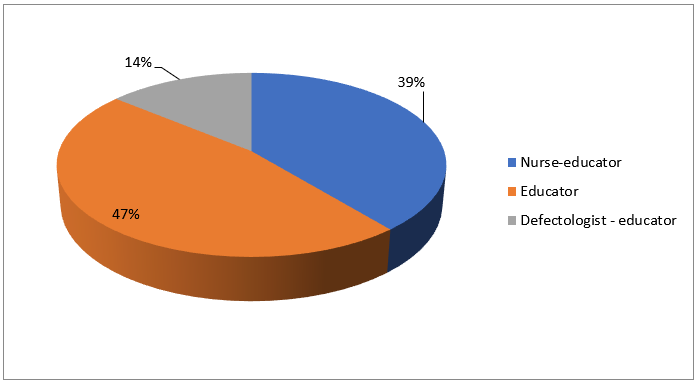
Figure 1. Structure of the sample according to the respondents’ level of education
As it can be seen from the Figure 1, 59 employees of the preschool institution “Miša Cvijović” participated in the quantitative research. Out of total 59 respondents, 47.5% are educators, that is, 28 educators, 39% are nurses, that is, 23, and 13.6% are special education teachers, that is, 8 of them.
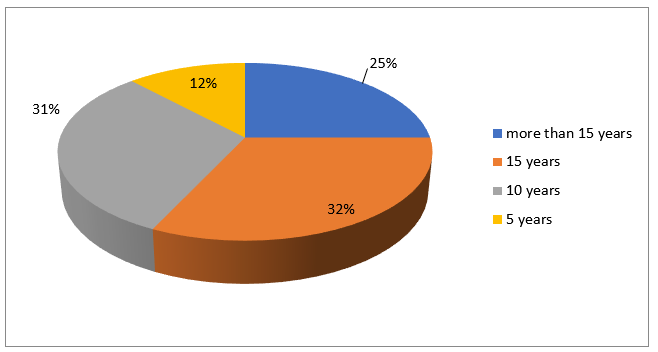
Figure 2. Structure of the sample according to the respondents’ work experience
When it comes to the years of the educators’ work experience, four categories have been established (up to 5 years, 5 to 10 years, 10 to 15 years and over 15 years). 11.9% of respondents have up to 5 years of work experience, or 7 of them, 30.5% of respondents have 5 to 10 years of experience, i.e., 18 teachers of preschool children, 32.2% of employees have 10 to 15 years of age, actually 19 of them, while 25.4% of respondents, or 15 of them, have over 15 years of service (Figure 2).
Table 1. The cross-relationship between the years of work experience and the level of education of the respondents
| Work experience | Total (Ʃ) | ||||||
| 5 years | 10 years | 15 years | +15 years | ||||
| Level of education | Educator | F | 6 | 7 | 8 | 7 | 28 |
| % | 21,4% | 25,0% | 28,6% | 25,0% | 100,0% | ||
| Nurse-educator | F | 0 | 5 | 10 | 8 | 23 | |
| % | 0,0% | 21,7% | 43,5% | 34,8% | 100,0% | ||
| Defectologist-educator | F | 1 | 6 | 1 | 0 | 8 | |
| % | 12,5% | 75,0% | 12,5% | 0,0% | 100,0% | ||
| Total (Ʃ) | F | 7 | 18 | 19 | 15 | 59 | |
| % | 11,9% | 30,5% | 32,2% | 25,4% | 100,0% | ||
Table 1 displays years of work experience for three categories of employees. Out of total 28 educators, 21.4% of them (6 educators) have up to 5 years of work experience; 25% have 5 to 10 years of work experience; 28.6% have been employed for 10 to 15 years, while 25% of educators work for over 15 years. Out of total 23 nurses-educators (N=23), 21.7% of them have 5 to 10 years of work experience; 43.5% have been employed for 10 to 15 years, while 34.8% of the nurses-educators have been working for more than 15 years. Out of 8 defectologists, one defectologist-educator has up to 5 years of work experience; 75% has 5 to 19 years of work experience, while there is also one with 10 to 15 years of work experience.
Descriptive indicators
The IBM SPSS Statistics 24 package was used for statistical data processing. The data analysis included the methods of descriptive and inferential statistics. Numerical features are shown by mean values (arithmetic mean) and measures of variability (standard deviation, range of values). Attributive features are presented using frequencies and percentages. For the univariate analysis, the application of the Chi square test (χ2) test for attributive characteristics was used. The limit of statistical significance was set at 0.05.
Descriptive indicators on all research questions have been presented within the charts. Absolute frequencies as well as the percentage of responses have been shown. The questions to which respondents answered on a Likert scale are presented as averages (arithmetic mean ± standard deviation).
Table 2. Kindergarten as a stimulating place for familiarizing with and adopting cultural and traditional values
| F | % | ||
| Is the kindergarten a stimulating place for familiarizing with and adopting cultural and traditional values? | Yes | 57 | 96,6% |
| No | 2 | 3,4% | |
| Total (Ʃ) | 59 | 100,0% | |
When we talk about the educators’ opinion that the kindergarten is a stimulating place for getting to know and adopting traditional and cultural values, a large number of educators think that the kindergarten is a stimulating place for getting to know and adopting the mentioned values, 96.6% of respondents, that is, 57 educators. 3.4% of respondents do not agree with this statement, which is a significantly smaller number of educators, 2 of them (Table 2).
Table 3. Nurture and preservation of one’s culture and tradition along with introducing to another culture and tradition
| F | % | Min | Max | M | SD | ||
| Do you nurture and preserve the children’s culture and tradition and introduce them to another culture and tradition? | Very often | 14 | 23,7% | 1,00 | 3,00 | 2,102 | 0,759 |
| Often | 25 | 42,4% | |||||
| Rarely | 20 | 33,9% | |||||
| Never | 0 | 0,0% | |||||
| Total (Ʃ) | 59 | 100,0% | |||||
It has been assumed that the contents concerning cultural and traditional values are represented in a satisfactory manner. Less than half of the educators surveyed, 23.73% of them, claim that in their work with children of preschool age they nurture and preserve the culture and traditions of the children very often, but they also introduce them to other traditions and cultures; 25 of the educators surveyed (42.37%) answered that they often aim to nurture and preserve the culture and traditions of the children who attend kindergarten, while at the same time familiarizing them with another culture and tradition, while 20 interviewed educators, 33.90% of them, are of the opinion that in their work they rarely influence the nurturing and preservation of culture and tradition among children.
Table 4. Educators’ approach to planning and realizing of the activities based on cultural and traditional values
| Work experience | |||||||||
| 5 years | 10 years | 15 years | +15 years | ||||||
| F | % | f | % | f | % | f | % | ||
| How do you approach planning and realizing of the activities based on cultural and | Responsibly and seriously | 0 | 0,0% | 5 | 27,8% | 4 | 21,1% | 4 | 26,7% |
| Systematically and consciously | 4 | 57,1% | 11 | 61,1% | 12 | 63,2% | 9 | 60,0% | |
| traditional values?
|
Freely | 3 | 42,9% | 2 | 11,1% | 3 | 15,8% | 2 | 13,3% |
| Nothing specific | 0 | 0,0% | 0 | 0,0% | 0 | 0,0% | 0 | 0,0% | |
| Total | 7 | 100,0% | 18 | 100,0% | 19 | 100,0% | 15 | 100,0% | |
χ2=5,265, df=6, p=0,510
It has been assumed that the educators’ opinions differ in relation to the years of their work engagement – the educators of children who have been working in kindergartens for several years approach activities based on cultural and traditional values more systematically and consciously. According to years of work experience, respondents were classified into four different categories: up to 5 years, up to 10 years, up to 15 years and more than 15 years of work experience. In the category of educators who work up to 5 years, 3 of them answered that they freely approach the planning and implementation of activities based on cultural and traditional values, while educators who work up to 15 years, 3 of them, answered the same. Within the category of educators who work up to 5 years, 4 of them answered that they systematically and very consciously approach the planning and implementation of activities based on cultural and traditional values, and 12 of them who work as educators up to 15 years gave the same answer.
Table 5. To which extent are contents concerning cultural and traditional values implemented in the kindergartens?
| Work experience | |||||||||
| 5 years | 10 years | 15 years | +15 years | ||||||
| F | % | f | % | f | % | f | % | ||
| To which extent are contents concerning | To a high extent | 1 | 14,3% | 4 | 22,2% | 3 | 15,8% | 4 | 26,7% |
| cultural and traditional values implemented in the kindergartens? | To a certain extent | 3 | 42,9% | 9 | 50,0% | 8 | 42,1% | 6 | 40,0% |
| Very few | 3 | 42,9% | 5 | 27,8% | 7 | 36,8% | 5 | 33,3% | |
| Not at all | 0 | 0,0% | 0 | 0,0% | 1 | 5,3% | 0 | 0,0% | |
| Total | 7 | 100,0% | 18 | 100,0% | 19 | 100,0% | 15 | 100,0% | |
χ2=3,385, df=9, p=0,947
As portrayed in the Table 5, 42.9% of employees with up to 5 years of work experience, or 3 of them, believe that activities with contents concerning cultural and traditional values are implemented in kindergartens to a certain extent; 50.0% of employed educators with 5 to 10 years of work experience believe that activities with the above-mentioned contents are implemented to a certain extent, actually 9 of them; 42.1% of the employees with 10 to 15 years of work experience claim the same, as well as 40.0% of those who have been working for more than 15 years. There is no statistically significant difference between the four compared groups of respondents (χ2=3.385, df=9, p=0.947).
As far as educators’ opinion related to the contents dealing with cultural and traditional values is concerned, it has been assumed that the educators’ opinions differ; those educators who have been employed in preschool institutions for a longer period of time are of the opinion that the activities with the mentioned content are implemented in a sufficient manner. Within the category of educators who have been employed for up to 5 years, only one answer was to a large extent, while within the category of the educators who have been employed for 15 years and more, 4 of them answered that contents with cultural and traditional elements are largely represented. Five educators with 10 years experience, answered very few, while seven educators with 15 years experience answered that very few activities with content about cultural and traditional values are implemented.
Table 6. Planning and realization of the activities concerning cultural and traditional values in all fields
| F | % | Min | Max | M | SD | ||
| To what extent are activities concerning cultural and traditional values realized in all fields? | To a high extent | 12 | 20,3% | 1,00 | 4,00 | 2,169 | 0,769 |
| To a certain extent | 26 | 44,1% | |||||
| Very few | 20 | 33,9% | |||||
| Not at all | 1 | 1,7% | |||||
| Total (Ʃ) | 59 | 100,0% | |||||
20.3% of employees in preschool institutions believe that activities with contents concerning cultural and traditional values in all areas are largely planned and implemented in kindergartens. 26 educators believe that activities with contents concerning cultural and traditional values in are planned and implemented in the preschool institution in all areas to a certain extent. As many as 33.9% of the surveyed educators are of the opinion that very few activities with contents dealing with cultural and traditional values are planned and implemented in the preschool institution in all areas. Only one respondent believes that the preschool institution does not plan and implement activities with the contents in question in all areas. The average of M=2.16±0.76 confirms the percentage arrangement (Table 6).
After displaying the descriptive indicators on all questions, we examined whether the respondents’ answers differ with regard to the level of education of the respondents included in the research: educator, nurse and defectologist. Differences were tested with the Chi-square test.
Table 7. Is the kindergarten a stimulating place for familiarizing with and adopting cultural and traditional values?
| Educator | Nurse – educator | Defectologist – educator | |||||
| F | % | f | % | f | % | ||
| Is the kindergarten a stimulating place for familiarizing with and adopting cultural and traditional values? | Yes | 26 | 92,9% | 23 | 100,0% | 8 | 100,0% |
| No | 2 | 7,1% | 0 | 0,0% | 0 | 0,0% | |
| Total | 28 | 100,0% | 23 | 100,0% | 8 | 100,0% | |
χ2=2,292, df=2, p=0,318
There is no statistically significant difference between educators, nurses and defectologists in the perception of preschool institutions as a stimulating place for getting to know and adopting cultural and traditional values (χ2=2.292, df=2, p=0.318). Educators in preschool institutions believe that kindergarten are a place in the function of getting to know and adopting traditional and cultural values, which conditions them to further implement activities with the mentioned values. Therefore, all three groups of respondents have a similar perception, i.e., the vast majority believes that the kindergarten is an encouraging place for getting to know and adopting cultural and traditional values (Table 7).
Table 8. How often do you nurture culture and tradition with elements of speech development activities during the work with children?
| Educator | Nurse – educator | Defectologist – educator | |||||
| F | % | f | % | f | % | ||
| How often do you nurture culture and tradition with elements of speech development activities during the work with children? | Very often | 7 | 25,0% | 7 | 30,4% | 0 | 0,0% |
| Often | 8 | 28,6% | 12 | 52,2% | 5 | 62,5% | |
| Rarely | 13 | 46,4% | 4 | 17,4% | 3 | 37,5% | |
| Never | 0 | 0,0% | 0 | 0,0% | 0 | 0,0% | |
| Total | 28 | 100,0% | 23 | 100,0% | 8 | 100,0% | |
χ2=8,074, df=4, p=0,089
In order to determine whether educators of preschool children nurture culture and tradition with elements of speech development activities, we offered four different modalities – very often, often, rarely and never. Respondents, regardless of the type of their level of education, have a similar perception that it nurtures culture and tradition along with elements of activities in the field of speech development, i.e., there are no statistically significant differences between the three groups (χ2=8.074, df=4, p=0.089). And yet, although there are no differences, the majority of educators (46.4%) believe that they rarely nurture culture and tradition with elements of speech development activities, while the majority of nurses (52.2%) believe that they often nurture culture and tradition with children, along with elements of speech development activities (Table 8).
Table 9. Thematic units for realization of the activities aimed at speech
| F | % | Min | Max | M | SD | ||
| Which thematic units do you use to realize the activities aimed at speech development? | Folk tales | 12 | 20,3% | 1,00 | 4,00 | 2,169 | 0,769 |
| Fairy tales | 26 | 44,1% | |||||
| Fables | 20 | 33,9% | |||||
| Songs | 1 | 1,7% | |||||
| Total (Ʃ) | 59 | 100,0% | |||||
When we talk about the thematic units through which activities in the field of speech development are implemented, 12 educators answered that they implement activities in the field of speech development through folk tales, while almost half of them (44.1%) implement activities in the field of speech development through fairy tales. As many as 33.9% of the surveyed educators claim to realize activities in the field of speech development through the various contents of fables. Only one respondent agreed that activities in the field of speech development are implemented with children through songs. The average of M=2.16±0.76 confirms the percentage arrangement (Table 9).
Table 10. Which art techniques do you use for thematic units based on preserving culture and tradition of preschool children?
| Work experience | |||||||||
| 5 years | 10 years | 15 years | +15 years | ||||||
| f | % | f | % | f | % | f | % | ||
| Which art techniques do you use for thematic units based on preserving culture and tradition of preschool children? | Graphic technique | 1 | 14,3% | 3 | 16,7% | 4 | 21,1% | 6 | 40,0% |
| Painting technique | 1 | 14,3% | 11 | 61,1% | 11 | 57,9% | 7 | 46,7% | |
| Drawing technique | 4 | 57,1% | 4 | 22,2% | 4 | 21,1% | 2 | 13,3% | |
| Combined technique | 1 | 14,3% | 0 | 0,0% | 0 | 0,0% | 0 | 0,0% | |
| Total | 7 | 100,0% | 18 | 100,0% | 19 | 100,0% | 15 | 100,0% | |
χ2=16,303, df=9, p=0,061
When it comes to the art techniques used by the educators during thematic units based on preserving the culture and tradition of preschool children, 4 of the educators who have been working for 5 years use drawing techniques, while just 2 of the educators who have been employed for more than 15 years gave the same answer. In the category of the educators who have been employed for 10 years, 11 of them declared that they use painting techniques while in the category of the educators who have been working for more than 15 years, 7 of them use painting techniques. Results further reveal that within the category of the educators who have been working for 5 years, only one of them uses graphic techniques, while within the category of the educators who have been working for more than 15 years, even 6 of them use graphic techniques. However, this difference is not statistically significant (χ2=16.303, df=9, p=0.061), Table 10.
Conclusions
This research has been conducted in order to shed light to the pivotal role of preschool institutions in preserving culture and tradition among preschool children. The goal of the research was to determine to which extent the contents of the current preschool program in the Republic of Serbia encourage educators to implement activities for the preservation of tradition and culture in preschool institutions.
As we have assumed, the preschool instituition is a stimulating place for acquiring cultural and traditional values, since the contents concerning those values are implemented in a satisfactory manner. The research results indicated that the respondents conduct activities that are aimed at preserving cultular heritage, such as folk tales, fairy tales, fables and songs. Educators with more work experience use art techniques, while those with less work experience use graphic, drawing and mixed techniques, which is mainly dependent on the childrens’ interests.
Research has shown that the preservation of culture and tradition in preschool institutions plays a key role in the development of children’s identity, their social ties and understanding of cultural elements and traditions. Although there are numerous challenges in the implementation of cultural content during children’s daily activities, the research results indicate a significant need for the integration of traditional values into the educational system in preschool institutions.
When it comes to improving work in preschool institutions, an emphasis has to be put on the necessity of professional education for preschool educators, organization of regular workshops, seminars and gatherings on the topic of cultural education, as well as the preservation of culture and tradition. Moreover, development of the curriculum that would be the basis for the integration of cultural values and norms within tradition, cooperation with the local community and other institutions, planning and implementation of cultural programs, performances and events, together with the involvement of parents in joint activities of children attending preschool institutions.
NOTES
- Basics of Preschool Upbringing and Education Program. (2018). Belgrade, Educational Review d.o.o. [in Serbian]. Available at https://prosveta.gov.rs/wp-content/uploads/2018/09/OSNOVE-PROGRAMA-.pdf
REFERENCES
Addison, A. C. (2000). Emerging Trends in Virtual Heritage, IEEE Multimedia, 7(2), 22 – 25. https://doi.org/10.1109/93.848421.
Barnard, M. (2013). Graphic Design as Communication. Routledge.
Cole, D., Sugioka, H., Lynch, L. (1999). Supportive Classroom Environments for Creativity. Journal of Creative Behavior, 33(4), 277 – 293. https://doi.org/10.1002/j.2162-6057.1999.tb01407.x.
Ćalić, M. R. (2011). National tradition cross-curricular links in classes in first four years of primary education. Zbornik radova Učiteljskog fakulteta Užice, 13, 245 – 256.
Gutierrez, D., Frischer, B., Cerezo, E., Gomez, A., Seron, F. (2007). AI and Virtual Crowds: Populating the Colosseum. Journal of Cultural Heritage, 8(2), 176 – 185. https://doi.org/10.1016/j.culher.2007.01.007.
Mihajlović, N. & Mihajlović, Lj. (2011). Metodika upoznavanja okoline. Cicero [in Serbian].
Milutinović, J. (2013). Socijalni rekonstrukcionizam i globalno obrazovanje. Teme, XXXVII(2), 517 – 533 [in Serbian].
Nikšić, N. (2009). Negovanje narodne tradicije u nastavi muzičke kulture za mlađe razrede osnovne škole. Inovacije u nastavi, 22(3), 107 – 112 [in Serbian].
Plavša, D. (1989). Muzičko-pedagoške dileme i teme. Akademija umetnosti u Novom Sadu. [in Serbian].
Terzić, E. (1998). Analiza i vrednovanje udžbenika muzičke kulture u osnovnoj školi u Mađarskoj i Srbiji. Centar za usavršavanje rukovodilaca u obrazovanju [in Serbian].
Živadinović, Z. (2011). Društveni i pedagoški značaj očuvanja narodnog muzičkog stvaralaštva u predškolskim ustanovama. U Naše stvaranje, zbornik radova sa VI simpozijuma “Vaspitač u XXI veku”, pp. 725 – 737. Aleksinac: Visoka škola za vaspitače strukovnih studija. ISBN978-86-903623-9-4.
Dr. Amela Muratović, Assoc. Prof.
ORCID iD: 0000-0002-3044-5575
WoS Researcher ID: Y-2942-2007
Dr. Admir Muratović, Assoc. Prof.
ORCID iD: 0009-0009-5245-8412
WoS Researcher ID: MIP-5410-2025
Dr. Kimeta Hamidović, Assoc. Prof.
ORCID iD: 0000-0002-7492-8632
WoS Researcher ID: JEF-0096-2023
University of Novi Pazar
Novi Pazar, Serbia
E-mail: amela.muratovic@uninp.edu.rs
E-mail: admir.muratovic@uninp.edu.rs
E-mail: kimeta.h@uninp.edu.rs
>> Download the article as a PDF file <<

Свързани статии:
 Historical and Cultural Roots of Tarot Cards. Analysis of Origin and Evolution
The Figurative Representations in the Dualistic Teaching of the Bogomils
Main, Transpositional and Modal Use of Present Tense in Bulgarian and Its Relations in English and Spanish
On the Path of Emotions – Small Steps Forming Big Values
Historical and Cultural Roots of Tarot Cards. Analysis of Origin and Evolution
The Figurative Representations in the Dualistic Teaching of the Bogomils
Main, Transpositional and Modal Use of Present Tense in Bulgarian and Its Relations in English and Spanish
On the Path of Emotions – Small Steps Forming Big Values